

Travel guide to Puerto Rico: top places and what to avoid

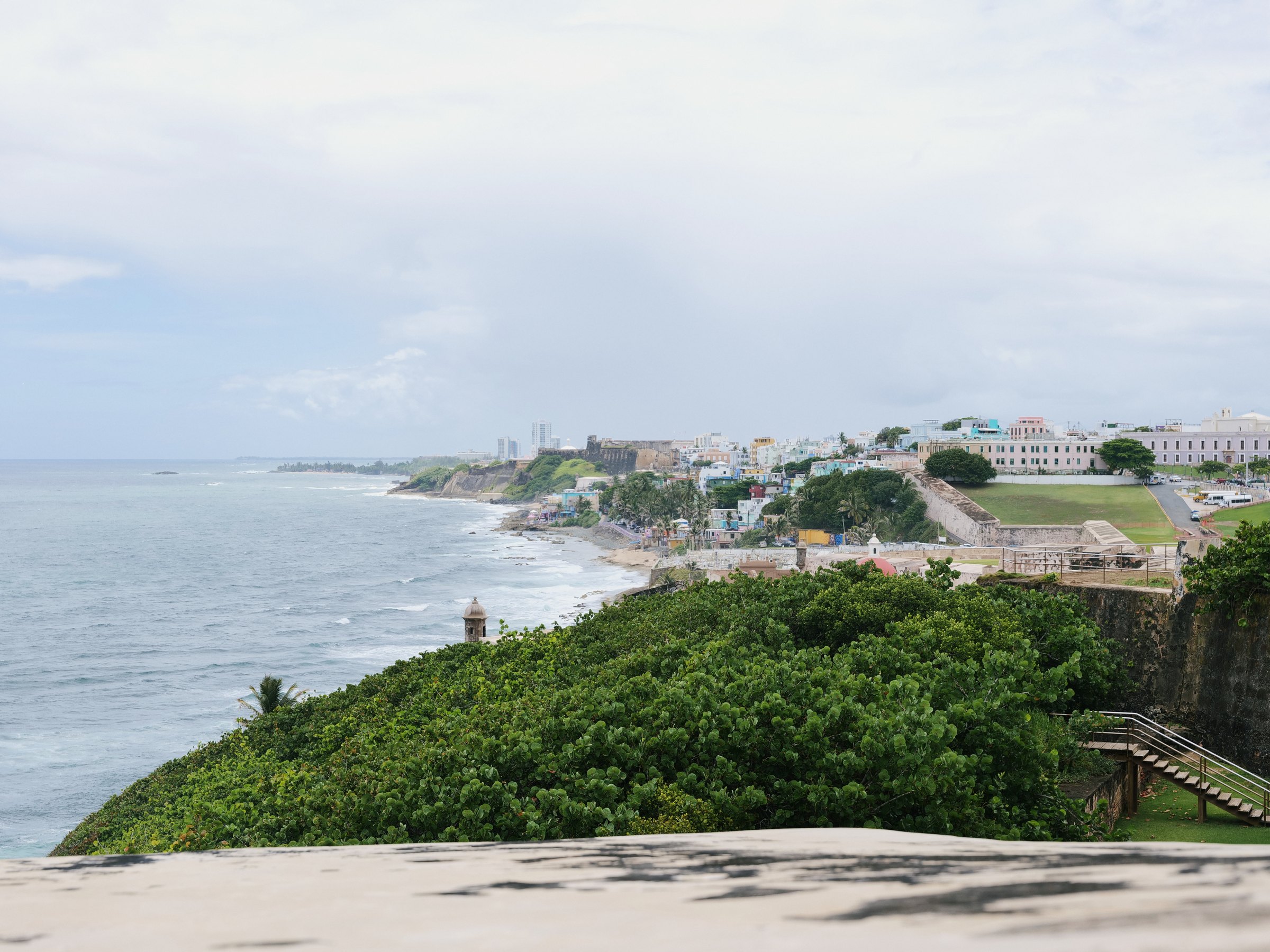
Why Puerto Rico?
An island the size of a small country in the heart of the Caribbean. Spain ruled it for 400 years, and it became American in 1898. Its people hold US passports but cannot vote for the president. You find the sea, the city and the rainforest in the same day, with the US dollar and both Spanish and English. That is why it is called “the Miami of the Caribbean.”
I visited and filmed the whole trip. In this guide I tell you where to go, what to avoid, and how to make the most of your time.
Places you must visit
1. Old San Juan
Colorful cobblestone streets, old Spanish houses and walls hundreds of years old. Walk it on foot, especially before sunset.
- Tip: wear comfortable shoes, the streets go up and down.
2. El Morro Castle (Castillo San Felipe del Morro)
The fortress the Spanish began building in 1539, and which held out against the Dutch attack in 1625. The view of the ocean from the top is one of the finest on the island.
- Tip: go early in the morning before the heat and the crowds, and check opening times and tickets on the National Park Service website.
3. The Devil’s Sentry Box (Garita del Diablo)
A watchtower on the Old San Juan wall with a famous legend about soldiers who used to vanish from it at night. A small place, but the story is good and the seaside location is superb.
4. La Perla
The colorful neighborhood below the walls of Old San Juan, famous worldwide after the song “Despacito.” The best view of it is from above, from the wall or from the old cemetery next to it.
- Tip: if you want to go down, go during the day and respect the residents’ privacy. Do not photograph people or their homes without permission.
5. Condado
The area of hotels, beach and lagoon, the closest thing to Miami. An excellent place to stay if you want to be close to everything.
6. Cueva Ventana (Window Cave)
The most beautiful view I have ever seen. A cave in the Arecibo area that looks out over a whole green valley with a river winding through the middle. The entire region is limestone mountains, caves and forests.
- Tip: entry is usually on a guided tour, so book ahead. Wear shoes suitable for mud and bring water.
7. El Yunque rainforest
The only rainforest in the US national forest system: waterfalls, hiking trails and tropical nature.
- Tip: advance booking is sometimes needed for the main road, so check the official site before you go.
8. The bioluminescent bays
Water that glows at night because of tiny organisms, an experience you will never forget. The most famous are Mosquito Bay on Vieques island and Laguna Grande in Fajardo.
- Tip: go on a night without a full moon, the glow shows up more.
Things and places to avoid
- Swimming at the northern beaches when a red flag is up. The currents there are strong and dangerous. Follow the lifeguards’ instructions.
- Traveling in the heart of hurricane season (August to October) if you have no flexibility with dates. If you do travel, follow the weather bulletin and have travel insurance.
- Leaving any belongings visible in the car, even for two minutes. This causes many thefts in tourist parking areas.
- Driving at night on mountain roads: narrow roads, sharp bends and little lighting.
- Unfamiliar residential neighborhoods at night. You will notice many homes have security bars, which is part of the safety culture here. Stay in well-known areas.
- Flying a drone over castles and reserves without a permit. Federal historic sites have their own rules, so check first.
Getting there and getting around
- Arrival: San Juan International Airport (SJU), with many flights from US cities.
- Getting around: in San Juan you get by with Uber and walking. Outside the city (Arecibo, El Yunque, Fajardo) rent a car, public transport is limited.
- Where to stay: Condado or Old San Juan for a first visit, and Arecibo or the countryside for nature lovers.
Food you must try
- Mofongo: mashed green plantain with garlic, the national dish. Order it with fish or shrimp.
- Alcapurrias and pastelillos: fried pastries sold at roadside and beach stands.
- Arroz con gandules: rice with pigeon peas.
- Fresh pineapple and coconut juice from the stands.
The bottom line
Puerto Rico combines the Caribbean and America in one place: Spanish history, nature you cannot imagine, and a modern city. But remember it is US territory, so entering it requires the same conditions as entering the US.
🎬 Watch the full trip on my YouTube channel, and if you have a question, write it in the comments or ask me in the chat on the site.
The information is for awareness only. Always check the official requirements (visa, opening times, bookings) before you travel.
Frequently asked questions
Do I need a visa for Puerto Rico?
Yes, if you hold an Arab passport. Puerto Rico is US territory, so the same entry rules as the US apply: you need a valid US visa. Check the official site travel.state.gov before you travel.
If I enter Puerto Rico, can I travel on to the US afterwards?
Flights between Puerto Rico and the US are domestic, and your official entry into the US happens when you arrive in Puerto Rico. Your legal status and visa must be valid, and there is an agricultural (USDA) check of bags before the flight.
What is the best time to travel?
From mid-December to April the weather is drier and nicer. Hurricane season runs from June to November, and tropical rain can fall suddenly even in summer.
Is Puerto Rico safe for tourists?
Tourist areas such as Old San Juan and Condado are generally safe, but be careful as in any city: do not leave belongings in the car, and avoid unfamiliar neighborhoods at night.
What is the currency, and are cards accepted?
The US dollar, and cards are accepted almost everywhere. Keep some small cash for roadside stands and mountain roads.
Is there halal food?
Options are limited compared with the US mainland. Search Google Maps for “halal” around San Juan, and there are plenty of fish and vegetable options.
For information only. Always check official requirements (visa, opening hours, bookings) before you travel. Full disclaimer